Jaw plates are designed to wear. The real problem begins when they wear faster than expected.
Premature jaw plate wear increases replacement frequency, maintenance costs, and the risk of unexpected crusher downtime.
But fast wear is not always caused by the jaw plate material itself.
The actual cause may be related to feed material, crusher settings, feeding conditions, jaw plate profile, installation, or manufacturing quality.
Here are nine common causes of excessive jaw plate wear and what you can do about them.
1. The Feed Material Is Too Abrasive
Abrasive rock can significantly accelerate jaw plate wear.
Materials containing hard minerals such as silica can create severe abrasive conditions.
If the crusher is processing a highly abrasive material, a standard jaw plate may not provide the service life expected in a less abrasive application.
The solution is to evaluate:
- Material hardness
- Abrasiveness
- Mineral composition
- Feed size
- Required production rate
Material selection should then be based on the actual working conditions.
2. The Jaw Plate Material Is Not Suitable
Using the wrong material can result in either excessive wear or premature failure.
For example, a material with insufficient wear resistance may wear rapidly in highly abrasive conditions.
On the other hand, selecting a very hard material without sufficient toughness may increase the risk of cracking under heavy impact.
The goal is not simply to maximize hardness.
The goal is to find the right balance between:
Wear Resistance + Toughness + Impact Resistance
High manganese steel and alloy steel can provide different performance characteristics depending on their composition and heat treatment.
3. The Jaw Plate Profile Is Incorrect
Jaw plate geometry affects how material moves through the crushing chamber.
An unsuitable tooth profile may result in:
- Poor material grip
- Uneven wear
- Localized stress
- Reduced crushing efficiency
- Premature replacement
A jaw plate should therefore be evaluated not only by material grade but also by profile and geometry.
For customized applications, changes to the profile may sometimes help improve wear distribution.
4. The Crusher Is Being Fed Unevenly
Uneven feeding can cause uneven loading inside the crushing chamber.
If material consistently enters one side of the chamber, one area of the jaw plate may experience significantly more wear than the rest.
This can result in an uneven wear pattern even when the jaw plate material itself is suitable.
Consistent feeding helps distribute the workload more evenly.
5. The Feed Size Is Too Large
Oversized feed material can create severe impact loading.
Large rocks entering the crusher may place concentrated loads on specific areas of the jaw plates.
This can contribute to:
- Localized wear
- Deformation
- Cracking
- Premature failure
The feed size should remain within the crusher’s recommended operating range.
6. Crusher Settings Are Not Appropriate
Crusher operating parameters can influence jaw plate wear.
If the crusher is operating outside its intended conditions, the wear pattern may change.
Depending on the equipment and application, parameters such as the closed-side setting, feed distribution, and operating load can influence wear.
When premature wear occurs, it is therefore useful to look at the entire crushing process rather than immediately blaming the wear part.
7. The Jaw Plate Is Not Installed Correctly
Even a well-manufactured jaw plate can perform poorly if it is installed incorrectly.
Installation should be checked for:
- Correct position
- Correct mounting
- Proper contact
- Fastener condition
- Alignment
- Clearance
An incorrectly installed jaw plate may experience abnormal loading and localized wear.
8. Heat Treatment or Material Quality Is Inconsistent
Manufacturing quality also plays an important role.
For cast wear parts, chemical composition, heat treatment, and microstructure can influence the final performance of the product.
A jaw plate may have the correct dimensions and still fail to deliver consistent service life if the material properties are inconsistent.
This is why professional wear parts manufacturers should control the process from melting through final inspection.
9. The Jaw Plates Are Not Being Replaced at the Right Time
Waiting until a jaw plate is completely worn out is not always the best maintenance strategy.
As the working profile changes, crushing performance may also change.
Severe wear can eventually affect:
- Crushing efficiency
- Product shape
- Material flow
- Crusher performance
- The condition of other components
Monitoring the wear profile and establishing a replacement threshold can help make maintenance more predictable.
How Can You Tell What Is Causing Fast Jaw Plate Wear?
The wear pattern can provide useful clues.
Wear concentrated in one area
Possible causes include:
- Uneven feeding
- Incorrect installation
- Uneven material flow
- Crusher alignment or operating issues
Uniform but extremely fast wear
Possible causes include:
- Highly abrasive feed material
- Insufficient wear resistance
- Incorrect material selection
- High production load
Cracking or breakage
Possible causes include:
- Excessive impact
- Insufficient toughness
- Improper heat treatment
- Casting defects
- Operating conditions outside the intended range
Uneven tooth wear
Possible causes include:
- Incorrect profile
- Uneven feed distribution
- Incorrect crusher settings
- Abnormal material flow
The exact cause should be evaluated based on the crusher, feed material, operating conditions, and actual wear pattern.
How to Extend Jaw Plate Service Life
There is no single solution for every crusher, but several basic practices can help.
1. Match the Material to the Application
Do not choose a jaw plate based only on hardness.
Consider abrasion, impact, feed size, and operating conditions.
2. Use the Correct Profile
A suitable tooth profile can help improve material grip and wear distribution.
3. Maintain Consistent Feeding
Avoid continuously feeding material to only one side of the crushing chamber.
4. Monitor Wear Regularly
Record wear patterns instead of waiting until failure occurs.
5. Verify Manufacturing Quality
For replacement jaw plates, ask the supplier about:
- Chemical composition
- Heat treatment
- Mechanical properties
- Metallography
- Dimensional inspection
6. Work With a Manufacturer That Understands Working Conditions
The best wear solution may require more than simply reproducing an existing casting.
An experienced manufacturer can evaluate the material, geometry, and working conditions together.
Why Manufacturing Quality Matters
A jaw plate is the result of multiple manufacturing stages.
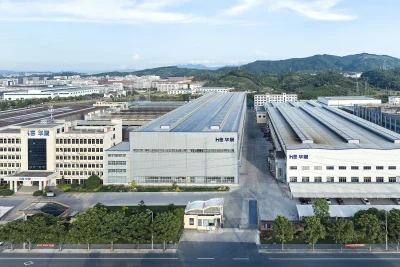
At Zhejiang Huasheng Metal Products Co., Ltd., the production process includes:
Pattern Making → Core Making → Melting → Pouring → Heat Treatment → Cleaning → Machining → Final Inspection
Chemical composition is checked during melting, while heat treatment and final inspection provide additional quality-control stages.
Metallographic inspection can also be used to evaluate the microstructure of the casting.
The purpose of these controls is not simply to make the product pass a final inspection.
The goal is to improve consistency from one production batch to the next.
Final Thoughts
Fast jaw plate wear is usually not caused by one factor alone.
The actual service life of a jaw plate is influenced by:
Material + Profile + Feed Material + Crusher Settings + Feeding Conditions + Manufacturing Quality
If your jaw plates are wearing faster than expected, the first step should be to identify the wear pattern and review the actual working conditions.
The solution may be a different material, a different tooth profile, a change in operating conditions, or a combination of these factors.
If you are experiencing premature jaw plate wear, send us your crusher model, jaw plate drawing, photos of the worn part, and information about the material being crushed. Our team can evaluate the application and discuss a suitable wear-part solution.