Manganese steel (especially high manganese steel with a manganese content of 10%-15%) has become a core wear-resistant material under harsh working conditions such as mining machinery and construction machinery, relying on its unique advantage of being “hard on the outside and tough on the inside”. Whether it is the jaw plate of a crusher, the bucket tooth of an excavator, or the lining plate of conveying equipment, the service life of manganese steel components directly affects equipment operation efficiency and production costs. Many enterprises and practitioners will face the problem of “excessively fast wear of manganese steel parts”. In fact, the service life can be significantly extended through scientific material selection, standardized use and reasonable maintenance. Today, we will elaborate on these practical methods.
I. Premise: Select the Right Manganese Steel Material to Match Working Condition Requirements
The first step to extend the service life of manganese steel is to “select the right material” — different working conditions correspond to manganese steel materials with different properties. No matter how well you maintain, it will be difficult to achieve the ideal effect if you choose the wrong material.
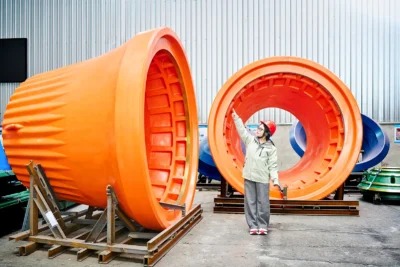
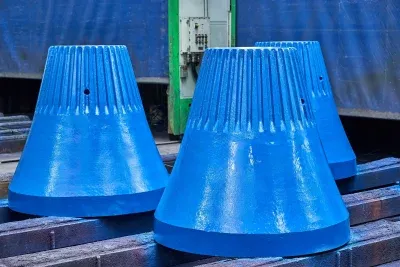
Manganese steel is not a “single type”. According to the adjustment of composition (such as adding alloying elements like chromium, molybdenum, nickel) and differences in heat treatment processes, it can be divided into ordinary high manganese steel, low-alloy high manganese steel, ultra-high manganese steel, etc. Ordinary high manganese steel is suitable for high-impact and low-stress wear scenarios (such as jaw plates of mining crushers); low-alloy high manganese steel improves hardness and wear resistance by adding chromium and molybdenum, and is more suitable for medium and high-stress wear working conditions (such as lining plates of loader buckets); ultra-high manganese steel is aimed at extreme scenarios with strong impact and high wear (such as mantles of large mines).
Material selection suggestions: First, clarify the core requirements of the working conditions — is it “impact-dominated” or “wear-dominated”? What is the hardness of the material? What is the equipment load? For example, for crushers processing hard granite, high manganese steel containing chromium alloy should be preferred; while for scrapers conveying relatively soft materials such as coal, ordinary high manganese steel can meet the needs. Avoid “overusing high-grade materials for low-demand scenarios” which causes cost waste, and even more avoid “underusing low-grade materials for high-demand scenarios” which leads to rapid failure of components.
II. Core: Standardize Use to Reduce Unnecessary Damage
Most wear of manganese steel comes from “improper use”, especially impact and friction exceeding its performance limits. Standardized operation can fundamentally reduce the wear rate.
1. Avoid Overload Operation and Control Impact Load
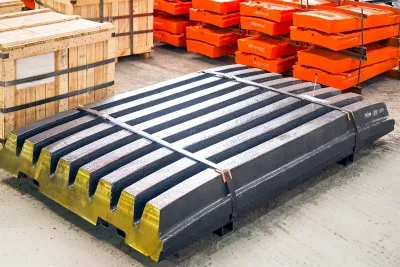
The work hardening characteristic of manganese steel needs “moderate impact” to be activated, but “excessive impact” will directly lead to component fracture or plastic deformation. For example, for jaw crushers, it is necessary to avoid forcibly feeding large ore blocks exceeding the size of the feed inlet and conduct pre-screening in advance; during excavator operation, do not use bucket teeth to forcibly impact hard rocks, but adopt the “layered excavation” method. During equipment operation, regularly check the load sensor to ensure that the load does not exceed 80% of the rated value, so as to reduce the damage of instantaneous overload to manganese steel components.
2. Ensure Uniform Material Contact to Avoid Local Wear
The failure of many manganese steel components stems from “local excessive wear”. For example, if the material always feeds to one side of the mantle of a cone crusher, it will lead to excessive wear on that side and shorten the overall service life; if the material conveying of the lining plate of conveying equipment is uneven, the local area will bear continuous scouring and friction. Solutions: Adjust the position of the feed inlet to ensure uniform material distribution; regularly check the levelness and verticality of the equipment to avoid uneven stress on components; for conveying equipment, guide plates can be installed at the easily worn parts of the lining plate to guide the uniform flow of materials.
3. Reduce Impurities in Materials to Lower Abrasive Wear
Fine impurities in materials (such as quartz sand, iron ore powder) will accelerate the wear of the manganese steel surface like “abrasives”. Especially in the conveying and crushing links, the continuous grinding of impurities will damage the hardened layer of manganese steel, doubling the wear rate. It is recommended to add a pre-treatment link before the material enters the equipment — such as installing impurity removal screens to filter fine impurities; for materials with high dust content, dust removal equipment can be equipped to reduce the grinding of manganese steel components by dust.
III. Key: Scientific Maintenance to Extend Component Service Cycle
Regular maintenance is the “guarantee” to extend the service life of manganese steel. Many people easily ignore this step and only replace components when they are severely worn, which increases costs instead. The focus of scientific maintenance is on “regular inspection, timely handling and reasonable repair”.
1. Regular Inspection to Timely Detect Hidden Dangers
It is recommended to formulate daily, weekly and monthly inspection plans: daily check the surface wear of manganese steel components and whether there are cracks, deformations and other problems; weekly measure the wear amount of components (such as the thickness of jaw plates, the length of bucket teeth), record the wear rate and judge whether it is normal; monthly check the fixing bolts and connectors of components to avoid component deviation caused by loosening and additional wear. Timely handle hidden dangers after discovery, such as replacing loose bolts and adjusting component positions, to avoid the expansion of small problems.
2. Do a Good Job in Lubrication and Protection to Reduce Dry Friction
If the connection parts between manganese steel components and other equipment parts (such as the connection between jaw plates and eccentric shafts, the connection between track shoes and track frames) lack lubrication, dry friction will occur, which not only wears manganese steel components but also damages connectors. Grease should be regularly added to these parts, and high-temperature resistant and wear-resistant lubricating products (such as lithium-based grease) should be selected to form a lubricating film and reduce direct friction between metals. At the same time, attention should be paid to sealing protection to avoid material impurities entering the lubrication parts and damaging the lubrication effect.
3. Reasonable Repair to Utilize Regeneration Value
When manganese steel components have slight wear, there is no need to replace them in a hurry. Their performance can be restored and service life extended through reasonable repair methods. There are two commonly used repair methods: one is surfacing repair. For components with large-area wear such as jaw plates and lining plates, high manganese steel surfacing electrodes can be used to surfacing a wear-resistant layer on the worn surface to restore the component size and wear resistance; the other is repair welding. For local cracks or small-area wear, repair welding can be used to fill the worn parts to avoid crack expansion. It should be noted that surfacing and repair welding must be operated by professionals, and the welding temperature and process should be controlled to avoid component deformation or performance degradation caused by welding.
4. Timely Replacement to Avoid Chain Damage
When the wear amount of manganese steel components reaches the rated limit (such as 30% reduction in jaw plate thickness, 25% reduction in bucket tooth length) or there are irreparable cracks, they should be replaced in time to avoid damage to other parts of the equipment after component failure. For example, if the jaw plate of a crusher breaks, it may hit the eccentric shaft and frame, causing more serious equipment failure and increasing maintenance costs instead.
IV. Advanced: Optimize Processing Technology to Improve the Intrinsic Performance of Manganese Steel
If you produce manganese steel components independently, you can also improve the basic performance of manganese steel through optimizing processing technology, thereby extending the service life from the source. There are two core optimization directions:
- Optimize heat treatment process: The conventional heat treatment of high manganese steel is “solution annealing” (heating to 1050-1100℃, rapid water cooling after heat preservation), which can obtain a single austenite structure and improve toughness and work hardening ability. To further improve wear resistance, heat treatment parameters can be adjusted — such as appropriately extending the heat preservation time to ensure austenite homogenization; optimizing water cooling speed to avoid pearlite structure. For low-alloy high manganese steel, the “quenching + tempering” heat treatment process can be adopted to improve hardness and wear resistance.
- Improve casting process: Defects such as porosity, sand holes and shrinkage cavities during casting will reduce the strength and wear resistance of manganese steel, leading to easy fracture of components from defects during use. Optimize casting process: Adopt lost foam casting or centrifugal casting to reduce casting defects; control pouring temperature and speed to avoid inclusions; conduct timely aging treatment after casting to eliminate internal stress.
Conclusion: Core Logic of Extending the Service Life of Manganese Steel
In fact, the core of improving the service life of manganese steel is very simple: select the right material to match the working condition, standardize use to reduce damage, and conduct scientific maintenance and timely repair. These three steps are interlocking and indispensable. For enterprises, extending the service life of manganese steel components can not only reduce replacement costs but also reduce equipment downtime and improve production efficiency. It is hoped that the above methods can provide practical reference for practitioners and allow manganese steel, a high-quality wear-resistant material, to exert greater value.
If your working condition is relatively special, such as processing high-hardness materials, or being in a high-temperature or low-temperature environment, welcome to leave a message in the comment area, and we can further discuss targeted solutions!