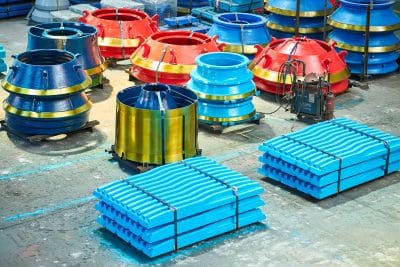
Choosing the right jaw plate is more important than simply finding a replacement part at the lowest price.
For mining, quarrying, aggregate production, and recycling operations, jaw plates are critical crusher wear parts. Their material, tooth profile, dimensions, hardness, toughness, and manufacturing quality can directly affect crushing performance, wear life, maintenance intervals, and operating costs.
At the same time, choosing the right jaw plate supplier is equally important.
A jaw plate may look correct when it arrives at your warehouse, but the real test begins after installation. If the material properties are inconsistent, the dimensions are inaccurate, or the casting quality varies from batch to batch, the result can be premature wear, cracking, unexpected replacement, and even unplanned crusher downtime.
So, how should you choose the right jaw plate?
And how can you choose a reliable jaw plate supplier for long-term supply?
This guide explains the key factors procurement teams and crusher operators should consider.
How to Choose the Right Jaw Plate?
A suitable jaw plate should match the crusher model, material being crushed, operating conditions, and required wear performance.
There is no single jaw plate design that is ideal for every application.
Before ordering, start with the following factors.
Confirm the Crusher Model
The first step is to identify the exact jaw crusher model.
Different crushers have different:
- Jaw plate dimensions
- Mounting configurations
- Tooth profiles
- Thicknesses
- Bolt or fastening arrangements
- Working chamber geometries
Even jaw plates that look similar may not be interchangeable.
When possible, provide the supplier with the crusher model, OEM part number, drawing, or existing jaw plate sample.
This allows the manufacturer to verify the design before production.
Consider the Material You Are Crushing
The material being processed is one of the most important factors when selecting a jaw plate.
Different feed materials create different combinations of impact and abrasive wear.
For example:
- Soft and less abrasive materials may require a different wear solution from hard rock.
- Highly abrasive materials can accelerate jaw plate wear.
- Large and heavy feed material can create severe impact loading.
- Recycled materials may produce different wear patterns from natural aggregates.
Therefore, the best jaw plate is not necessarily the hardest one.
The objective is to achieve the right balance between wear resistance and toughness for the actual crushing application.
Choose the Right Jaw Plate Material
Material selection is one of the most important factors affecting jaw plate performance.
Common materials used for crusher wear parts include high manganese steel and alloy steel, depending on the application and required properties.
High Manganese Steel Jaw Plates
High manganese steel has traditionally been widely used for jaw crusher wear parts because of its excellent toughness and its ability to work harden under suitable impact conditions.
It can be a suitable choice for applications involving significant impact loading.
Alloy Steel Jaw Plates
Alloy steel can provide different combinations of hardness, toughness, and wear resistance depending on its chemical composition and heat treatment.
For certain applications, alloy steel can be selected to meet specific wear and impact requirements.
The important point is that material grade should be selected according to the working conditions—not simply according to the highest available hardness.
Hardness Is Important, But Toughness Matters Too
One of the most common mistakes when purchasing jaw plates is focusing only on hardness.
Higher hardness does not automatically mean longer service life.
A jaw plate operates under repeated mechanical loading. If the material has insufficient toughness, excessive hardness may increase the risk of cracking or premature failure.
On the other hand, if hardness is too low for the application, abrasive wear can occur too quickly.
Therefore, a reliable jaw plate needs an appropriate balance of:
Hardness + Toughness + Microstructure + Wear Resistance
This balance is strongly influenced by both chemical composition and heat treatment.
Pay Attention to Jaw Plate Tooth Profile
The tooth profile of a jaw plate influences how the material is gripped and crushed inside the crushing chamber.
Different applications may require different profiles and designs.
The right profile can help optimize:
- Material grip
- Crushing efficiency
- Material flow
- Wear distribution
- Service life
When replacing an existing jaw plate, the supplier should carefully reproduce the required geometry rather than simply producing a visually similar component.
For OEM replacement or customized jaw plates, accurate drawings, samples, and dimensional information are particularly valuable.
Check Dimensional Accuracy
A jaw plate is a working component, not simply a piece of wear-resistant steel.
It must fit correctly inside the crusher.
Important dimensions may include:
- Overall length and width
- Thickness
- Mounting dimensions
- Hole positions
- Contact surfaces
- Tooth geometry
- Critical tolerances
Poor dimensional accuracy can create installation problems or affect the working relationship between the fixed and swing jaw plates.
For this reason, machining and final dimensional inspection are important parts of jaw plate production.
How to Choose a Reliable Jaw Plate Supplier?
Once you know which jaw plate you need, the next question is:
Who should manufacture it?
For an overseas buyer, selecting a supplier should involve more than comparing quotations.
A reliable supplier should demonstrate control over the entire manufacturing process.
Here are several important questions to ask.
Does the Supplier Actually Manufacture the Jaw Plates?
This may sound obvious, but it is an important question.
There is a significant difference between a direct casting manufacturer and a trading company purchasing finished castings from another factory.
When you work directly with a foundry, you can communicate directly with the people responsible for:
- Material selection
- Melting
- Casting
- Heat treatment
- Machining
- Inspection
- Production scheduling
This can make technical communication more efficient and provide better visibility into quality control.
For long-term supply, direct communication with the manufacturer can also make it easier to solve technical problems and optimize products.
How Does the Supplier Control Chemical Composition?
A reliable jaw plate supplier should have a clear process for controlling chemical composition.
For alloy steel and high manganese steel castings, elements such as:
- Carbon
- Manganese
- Silicon
- Chromium
- Phosphorus
- Sulfur
can affect the final properties of the material.
At Zhejiang Huasheng Metal Products Co., Ltd., raw material recipes are controlled according to the specified material grade.
During melting, samples are analyzed using a spectrometer, and the chemical composition is checked against the required specification before the molten metal proceeds to pouring.
This provides an important control point before casting.
How Does the Supplier Control Heat Treatment?
Casting the correct material is only part of the manufacturing process.
For many crusher wear parts, heat treatment has a major influence on the final properties of the casting.
A supplier should be able to explain:
- How furnace temperature is controlled
- How cooling is controlled
- How quenching is monitored
- How different material grades are processed
- How heat treatment results are verified
At Zhejiang Huasheng Metal Products Co., Ltd., the heat treatment process is supported by real-time monitoring systems.
The quenching pool includes six temperature monitoring points, allowing water temperature to be tracked during the process.
The heat treatment system also includes cooling towers designed to support stable cooling conditions during continuous production.
This type of process monitoring is important because consistent heat treatment contributes to consistent mechanical properties.
Does the Supplier Perform Metallographic Inspection?
A professional wear parts manufacturer should look beyond appearance and dimensional inspection.
Metallographic inspection provides information about the microstructure of the casting and can help verify the effectiveness of the heat treatment process.
For each heat treatment batch, metallographic inspection of the casting body provides an additional quality-control checkpoint.
This is particularly important for wear parts that must withstand repeated impact and abrasion.
Does the Supplier Monitor Long-Term Process Stability?
One qualified batch does not necessarily mean that a supplier can provide stable quality for the next three years.
For overseas customers, batch-to-batch consistency is often more important than a single successful shipment.
A reliable supplier should have systems for monitoring production stability over time.
For example, Zhejiang Huasheng Metal Products Co., Ltd. produces equal-thickness test blocks every three months to help evaluate the stability of the heat treatment process.
The purpose is not simply to pass one inspection.
The purpose is to continuously verify whether the manufacturing process remains stable.
Can the Supplier Handle Different Jaw Plate Sizes?
A customer’s requirements may change over time.
One project may require relatively small castings, while another may involve much larger crusher wear parts.
A supplier with flexible melting and casting capacity can make production planning easier.
Zhejiang Huasheng Metal Products Co., Ltd. operates 3-ton, 5-ton, and 10-ton medium-frequency furnaces, providing flexibility for different casting sizes and production requirements.
For customers sourcing multiple types of wear parts, this can also reduce the need to manage too many different suppliers.
Can the Supplier Produce Other Crusher Wear Parts?
This is another practical consideration for procurement teams.
If you are already purchasing jaw plates, you may also need:
- Cone crusher mantles
- Cone crusher concaves
- Side liners
- Gyratory crusher wear parts
- Other customized crusher wear parts
Working with one experienced foundry for multiple components can simplify:
Supplier Management → Technical Communication → Quality Control → Production Coordination → Logistics
Instead of coordinating different suppliers for every individual casting, a broader manufacturing capability can provide a more efficient sourcing solution.
Does the Supplier Support OEM and Customized Production?
Not every customer needs an off-the-shelf jaw plate.
International buyers may require:
- OEM replacement parts
- Non-OEM equivalent parts
- Customized tooth profiles
- Modified dimensions
- Specific material grades
- Drawings-based production
- Sample-based reverse engineering
A flexible foundry should be able to work from the information available to the customer.
Depending on the project, this may include a drawing, sample, OEM part number, crusher model, or technical specification.
Don’t Choose a Jaw Plate Supplier Based Only on Price
Price is important, but it should not be the only purchasing criterion.
Consider the total cost of ownership instead.
A lower-priced jaw plate may become more expensive if it:
- Wears prematurely
- Requires frequent replacement
- Causes unexpected maintenance
- Has inconsistent dimensions
- Creates installation problems
- Results in additional transportation costs
- Leads to unplanned crusher downtime
For mining and aggregate customers, the cost of lost production can be much higher than the price difference between two wear parts.
Therefore, a better purchasing question is:
Which supplier can provide the most reliable performance and consistent supply at a competitive total cost?
A Practical Checklist for Choosing a Jaw Plate Supplier
Before placing an order, overseas buyers can use the following checklist.
Product
- Does the jaw plate match the crusher model?
- Is the tooth profile correct?
- Are the dimensions and mounting points accurate?
- Is the material suitable for the application?
Manufacturing
- Is the supplier a direct foundry?
- Can they control melting and chemical composition?
- Do they have their own heat treatment capability?
- Can they perform machining and dimensional inspection?
Quality
- Is chemical composition tested?
- Is heat treatment monitored?
- Is metallographic inspection performed?
- Is batch-to-batch consistency monitored?
Supply
- Can the supplier handle different order quantities?
- Can they produce different casting sizes?
- Can they manufacture other crusher wear parts?
- Can they support long-term OEM/customized production?
If the answer to most of these questions is yes, you are looking beyond a simple parts supplier and evaluating the supplier’s actual manufacturing capability.
Why Choose Zhejiang Huasheng Metal Products Co., Ltd.?
Zhejiang Huasheng Metal Products Co., Ltd. is an export-oriented casting manufacturer specializing in wear-resistant castings for mining, crushing, recycling, and heavy equipment applications.
Our production system covers the major stages of casting production, including:
Mold Making → Core Making → Melting → Pouring → Heat Treatment → Cleaning → Grinding → Machining → Final Inspection
Our product range includes jaw plates, cone crusher mantles, concaves, side liners, shredder hammers, and other customized wear parts.
With multiple melting capacities and in-house heat treatment and inspection capabilities, we aim to provide overseas customers with more than individual replacement parts.
Our focus is on building stable, repeatable manufacturing capability for long-term supply.
Final Thoughts: Choose the Jaw Plate—and the Foundry Behind It
Choosing the right jaw plate starts with understanding your crusher, feed material, operating conditions, material requirements, and desired wear performance.
But choosing the right jaw plate supplier requires a broader evaluation.
Look beyond the quotation.
Ask how the supplier controls raw materials, chemical composition, casting, heat treatment, dimensional accuracy, metallographic structure, and batch consistency.
Because ultimately, a reliable jaw plate is not created by one inspection at the end of production.
It is created by a controlled manufacturing process from beginning to end.
For mining and aggregate customers, the right jaw plate can contribute to predictable wear performance.
The right supplier can go one step further—helping you build a stable supply chain for your crusher wear parts and reduce the risks associated with inconsistent quality and unexpected replacement.
Looking for a reliable jaw plate manufacturer or crusher wear parts supplier?
Send us your drawing, sample, OEM part number, or crusher model. Our team can review your requirements and discuss the appropriate casting and material solution for your application.