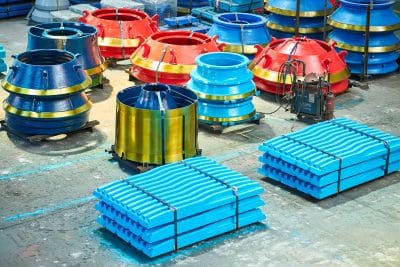
In metal recycling, the shredder hammer is one of the most critical wear parts inside a metal shredding machine.
Whether processing scrap cars, steel scrap, castings, appliances, or other metal materials, shredder hammers are exposed to repeated high-impact loading, severe abrasion, and continuous mechanical stress.
When a hammer wears too quickly or fails unexpectedly, the consequences can extend far beyond the cost of the replacement part. Production may slow down, maintenance may be required earlier than planned, and the entire shredding line may experience unexpected downtime.
For this reason, choosing the right metal shredder hammer is an important decision for metal recycling companies.
But what makes a good shredder hammer?
How should you choose the right material?
And what should you look for when selecting a reliable shredder hammer manufacturer?
This guide explains the key factors.
What Is a Metal Shredder Hammer?
A metal shredder hammer is a replaceable wear component mounted on the rotor of a metal shredding machine.
During operation, the rotor rotates at high speed while the hammers repeatedly strike incoming scrap metal. The impact breaks, tears, and separates the material into smaller pieces.
Because the hammer directly interacts with the scrap, it experiences some of the most severe operating conditions inside the shredder.
Typical wear mechanisms include:
- High-impact loading
- Abrasive wear
- Repeated impact
- Friction
- Mechanical fatigue
- Localized stress
This means that shredder hammer performance depends on more than simply the hardness of the material.
A high-performance hammer needs an appropriate combination of wear resistance, impact toughness, hardness, microstructure, and dimensional accuracy.
Why Shredder Hammer Quality Matters
For a metal recycling plant, the cost of a shredder hammer is only one part of the total operating cost.
A hammer with poor wear resistance may need to be replaced more frequently.
A hammer with insufficient toughness may be more vulnerable to cracking or breakage.
A hammer with inconsistent dimensions may affect installation or rotor balance.
And inconsistent quality between batches can make maintenance planning difficult.
A reliable shredder hammer should help operators achieve:
- More predictable wear
- Longer replacement intervals
- Stable shredding performance
- Reduced maintenance interruptions
- Better production planning
The objective is not simply to manufacture a hammer that fits the machine.
The objective is to manufacture a hammer that performs consistently under the customer’s actual operating conditions.
How to Choose the Right Metal Shredder Hammer
There are several important factors to consider before purchasing shredder hammers.
1. Shredder Model and Hammer Dimensions
The first step is confirming the exact shredder model and hammer specifications.
Important information may include:
- Shredder model
- Hammer dimensions
- Mounting dimensions
- Weight
- Pin or hole dimensions
- Working profile
- Rotor configuration
Different shredders may use different hammer designs.
Even if two hammers look similar, their dimensions and mounting configuration may not be interchangeable.
For OEM replacement or customized production, customers can provide drawings, samples, part numbers, or equipment information to help the manufacturer verify the required design.
2. Consider the Type of Scrap Being Processed
The material being shredded has a major influence on hammer wear.
A shredder processing light scrap may experience a different wear pattern from a machine processing heavy steel scrap.
Applications may include:
- Scrap automobiles
- Steel scrap
- Aluminum products
- Castings
- Household appliances
- Mixed metal scrap
- Other recyclable metal materials
Heavy and difficult-to-process scrap can create severe impact loading.
Highly abrasive material can accelerate wear.
Therefore, hammer material and design should be selected according to the actual application.
3. Choose the Right Shredder Hammer Material
Material selection is one of the most important factors affecting hammer performance.
For metal shredder applications, alloy steel is widely used for applications requiring a balance of hardness, toughness, and wear resistance.
The appropriate alloy composition depends on the specific working conditions and required performance.
Chemical elements such as:
- Carbon
- Chromium
- Manganese
- Silicon
- Molybdenum
- Other alloying elements
can influence the final properties of the casting.
However, alloy composition alone does not determine the performance of a shredder hammer.
The final properties also depend heavily on the heat treatment process and resulting microstructure.
Hardness vs. Toughness: What Is More Important?
This is one of the most important questions when choosing a shredder hammer.
The simple answer is:
Both matter.
Hardness contributes to resistance against abrasive wear.
Toughness helps the hammer withstand repeated impact and mechanical stress without premature cracking or breakage.
If the hammer is too soft, it may wear rapidly.
If the hammer is excessively hard but lacks sufficient toughness, severe impact may increase the risk of cracking or failure.
Therefore, the goal should not be to achieve the highest possible hardness.
The goal is to achieve the right balance between hardness and toughness for the actual shredding application.
Heat Treatment Is Critical to Shredder Hammer Performance
For alloy steel shredder hammers, heat treatment is a critical manufacturing process.
After casting, controlled heat treatment can modify the microstructure and mechanical properties of the alloy steel.
The heat treatment process may involve:
Heating → Holding → Quenching or Controlled Cooling → Subsequent Treatment
The exact process depends on the material grade, hammer design, section thickness, and required mechanical properties.
Important process parameters include:
- Heating temperature
- Holding time
- Cooling method
- Cooling rate
- Quenching temperature
- Water temperature
- Final hardness
- Metallographic structure
For large castings, heat treatment becomes particularly important because different sections of the casting may cool at different rates.
A controlled heat treatment process helps improve production consistency.
How a Foundry Controls Shredder Hammer Quality
A professional shredder hammer manufacturer should control quality throughout the production process rather than relying only on final inspection.
A complete manufacturing process may include:
Mold Making → Core Making → Melting → Chemical Analysis → Pouring → Heat Treatment → Cleaning → Grinding → Machining → Final Inspection
Each stage contributes to the final quality of the hammer.
Chemical Composition Control During Melting
The chemical composition of alloy steel must be controlled according to the required material grade.
At Zhejiang Huasheng Metal Products Co., Ltd., raw materials and alloy additions are prepared according to the specified material composition.
During melting, samples are taken for spectrometer analysis.
Elements such as carbon, manganese, silicon, chromium, phosphorus, and sulfur are checked against the required specification.
Only after the chemical composition is confirmed to meet the required range can the molten metal proceed to pouring.
This provides an important control point before the casting stage.
Heat Treatment Monitoring for Alloy Steel Hammers
Heat treatment consistency is particularly important for large and heavy alloy steel shredder hammers.
Our heat treatment workshop is equipped with electronic monitoring systems for tracking critical process information.
The quenching pool has six temperature monitoring points, allowing water temperature to be monitored in real time.
The cooling system also includes two cooling towers. Each cooling tower can process approximately 500 tons of water per hour, helping maintain stable cooling conditions during continuous production.
The heat treatment trolleys are also equipped with thermal imaging cameras to record temperature information before castings enter the quenching process.
These monitoring systems provide additional process data and help improve heat treatment consistency.
Metallographic Inspection for Shredder Hammers
A shredder hammer cannot be evaluated by appearance and hardness alone.
The internal microstructure is also important.
For this reason, metallographic inspection is performed for every heat treatment batch.
Metallographic examination can provide information about the microstructure produced by the heat treatment process and provide an additional quality verification point.
For wear parts exposed to repeated impact, this type of inspection is an important part of process control.
Periodic Testing for Long-Term Process Stability
Consistent production is especially important for customers who purchase shredder hammers repeatedly.
A supplier should be able to demonstrate not only that one batch meets requirements, but also that the manufacturing process remains stable over time.
At Zhejiang Huasheng Metal Products Co., Ltd., equal-thickness test blocks are produced every three months to help evaluate heat treatment stability.
The test block thickness is designed to correspond to the wall thickness of actual products, making the test more representative of real production conditions.
This periodic testing provides an additional method of monitoring long-term process stability.
Why Casting Quality Matters for Shredder Hammers
Casting defects can become serious problems when a component is exposed to repeated high-impact loading.
A reliable casting process should focus on controlling factors such as:
- Mold quality
- Core accuracy
- Chemical composition
- Pouring conditions
- Solidification
- Heat treatment
- Surface quality
- Dimensional accuracy
After casting, cleaning and grinding remove casting residues and help reveal the actual condition of the component.
Machining then brings critical dimensions to the required specifications.
Finally, inspection verifies that the finished hammer meets the customer’s requirements.
OEM and Customized Metal Shredder Hammers
Metal recycling companies do not always require a standard replacement hammer.
Depending on the equipment and application, customers may require customized:
- Hammer dimensions
- Hammer profiles
- Mounting holes
- Material grades
- Hardness requirements
- Weight
- Casting design
A capable foundry should be able to manufacture according to customer drawings, samples, OEM part numbers, or technical specifications.
This is particularly useful when customers need replacement parts for older or customized shredding equipment.
How to Choose a Reliable Shredder Hammer Manufacturer
When selecting a supplier, price should not be the only consideration.
For long-term metal recycling operations, it is worth evaluating the manufacturer’s actual production capability.
Is the supplier a direct foundry?
A direct manufacturer can provide closer control over casting, heat treatment, machining, and inspection.
Does the supplier control chemical composition?
Ask whether spectrometer analysis is performed during melting.
Does the supplier have its own heat treatment capability?
Heat treatment has a major influence on alloy steel hammer performance.
How is heat treatment monitored?
Ask about temperature monitoring, cooling control, and process records.
Does the supplier perform metallographic inspection?
This can provide additional verification of the heat treatment and microstructure.
Can the supplier maintain batch-to-batch consistency?
Long-term supply requires repeatable manufacturing, not just one successful shipment.
Can the supplier produce other metal shredder wear parts?
A broader product capability can simplify procurement and supplier management.
A Complete Supplier for Metal Shredder Wear Parts
For metal recycling companies, shredder hammers are rarely the only wear parts required.
Depending on the equipment, customers may also need:
- Protection plates
- Side liners
- Grate bars
- Other shredder liners
- Customized alloy steel castings
Working with a manufacturer capable of producing multiple metal shredder wear parts can simplify sourcing and technical communication.
Instead of managing different suppliers for different components, customers can work with one foundry for a broader range of replacement parts.
Why Choose Zhejiang Huasheng Metal Products Co., Ltd.?
Zhejiang Huasheng Metal Products Co., Ltd. is an export-oriented casting manufacturer serving customers in mining, metal recycling, crushing, and heavy equipment industries.
Our manufacturing process covers:
Mold Making → Core Making → Melting → Pouring → Heat Treatment → Cleaning → Grinding → Machining → Final Inspection
Our melting capacity includes 3-ton, 5-ton, and 10-ton medium-frequency furnaces, allowing production to be arranged for different casting sizes and order requirements.
Our product range includes alloy steel shredder hammers, protection plates, side liners, grate bars, crusher wear parts, and other customized wear-resistant castings.
For overseas customers, our focus is not simply on producing one replacement part.
We aim to provide stable quality, repeatable production, flexible customization, and reliable long-term supply.
Conclusion: The Right Shredder Hammer Is More Than a Replacement Part
Choosing a metal shredder hammer should involve more than checking the price and dimensions.
The right hammer should match the:
Shredder → Scrap Material → Working Conditions → Material Grade → Heat Treatment → Required Wear Performance
At the same time, the supplier behind the hammer matters just as much.
A reliable foundry should have the ability to control the complete manufacturing process—from raw materials and melting to casting, heat treatment, machining, and final inspection.
For metal recycling companies, this means greater confidence in wear consistency, replacement planning, and long-term supply.
If you are sourcing metal shredder hammers, alloy steel shredder hammers, shredder wear parts, protection plates, side liners, or grate bars, Zhejiang Huasheng Metal Products Co., Ltd. can manufacture according to your drawings, samples, part numbers, and technical requirements.
Send us your hammer drawing, sample, or part number to discuss your next project.
Frequently Asked Questions About Metal Shredder Hammers
What is a metal shredder hammer?
A metal shredder hammer is a replaceable wear component mounted on the rotor of a metal shredding machine. It repeatedly impacts scrap metal and is therefore exposed to severe impact and abrasive wear.
What material is commonly used for metal shredder hammers?
Alloy steel is commonly used for metal shredder hammers where a combination of hardness, toughness, and wear resistance is required. The appropriate material grade depends on the application and operating conditions.
What makes a good shredder hammer?
A good shredder hammer needs an appropriate balance of wear resistance, hardness, toughness, microstructure, dimensional accuracy, and casting quality. Maximum hardness alone does not necessarily provide the best performance.
Why is heat treatment important for alloy steel shredder hammers?
Heat treatment modifies the microstructure and mechanical properties of alloy steel. Properly controlled heat treatment helps achieve the required balance between hardness and toughness and improves production consistency.
How can I choose a shredder hammer supplier?
Look for a direct foundry with control over melting, chemical composition, casting, heat treatment, machining, and inspection. The supplier should also be able to demonstrate batch-to-batch consistency and manufacture according to drawings or samples.
Can shredder hammers be customized?
Yes. A professional foundry can manufacture customized shredder hammers based on customer drawings, samples, OEM part numbers, dimensions, material grades, and application requirements.
What other metal shredder wear parts can a foundry manufacture?
Depending on its production capabilities, a foundry may manufacture protection plates, side liners, grate bars, shredder liners, and other customized alloy steel wear parts in addition to shredder hammers.